Monday, August 11, 2008

P-39: Transitional-era Fighters Go Head-to-Head

P-39: Transitional-Era Fighters Go Head-to-Head


The Accurate Miniatures P-39 vs. the Hasegawa P-400 Airacobra
Ned Barnett (Review copies provided by author)


The Aircraft

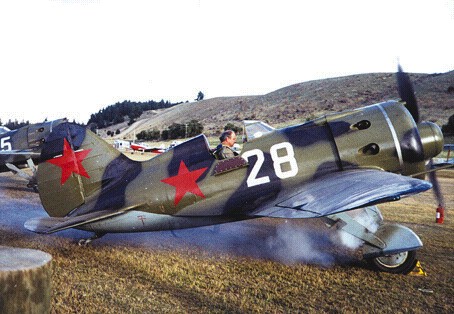
Transitional Era: The P-39 is an ideal example of what I like to call a “transitional-era” fighter. The Airacobra is from the late-1930s-generation of early all-metal, enclosed-cockpit, retractable-gear fighters with a militarily-significant armament (rather than the legacy WW-I-era armament of two rifle-caliber machine guns). This was a generation of fighters that included the American Air Corps P-35, the P-36 Hawk and early P-40 Tomahawks, as well as the Soviet I-16, the Fleet Air Arm’s Fairey Fulmar, the Japanese A5M “Claude” and the US Navy’s F2A Buffalo and F4F Wildcat.

These transitional-era planes were all forced into combat in World War II, fighting against later generation fighters – and though some were clearly outclassed, some (and this includes the P-39, the P-40 and the Wildcat) soldiered on right to the end of the war. What is even more remarkable, many of these transitional-era aircraft actually proved quite effective, though generally in very limited combat situations. Though it accomplished little for the U.S. Army Air Corps, the P-36 Hawk and the F2A Buffalo – a total failure for the Marines at Midway – achieved remarkable success in the hands of the Finnish Air Force. In the skies over Midway – and later over Guadalcanal – the seemingly-inferior F4F Wildcat scored a 7-to-1 kill ratio over the arguably superior A6M Zero Fighter. The same thing happened with the P-39 Airacobra – in the hands of Soviet fighter pilots, including some of their highest-scoring aces – was wildly successful against even late-model Luftwaffe fighters and skilled “experten.”

As an aside – for a more detailed review, go to http://barnettonaviation.blogspot.com/2007/01/hey-little-kobra-dont-ya-know-youre.html – the remarkable book “Attack of the Airacobras: Soviet Aces, American P-39s and the Air War Against Germany,” which was written by a Russian author (and WW-II Soviet tank commander who commanded a Lend-Lease Sherman) – details the Soviet view that below 17,000 feet, the Airacobra was faster, more maneuverable and superior in the vertical plane than the Bf-109 F and G, and A-model Fw-190s. While this seems a remarkable assertion to westerners who tend to think of the Airacobra as a second-line “dog,” and who believed the oft-told tale that the Soviets liked the P-39 for its tank-killing 37mm Oldsmobile auto-cannon, this book contends that in Soviet hands the P-39 was used primarily in air-to-air combat during the last two years of the war – from March, 1943 to May, 1945. Further, it was the mount of some of the Soviet Union’s top-scoring aces, including one remarkable pilot who shot down 50 confirmed Luftwaffe aircraft while flying P-39s … and lived to tell the tale.

This remarkable series of exploits is further recounted in Osprey’s new Soviet Lend-Lease Fighter Aces of World War II (Osprey Aircraft of the Aces Vol. 74) (link). The latter book emphasized that these P-39s were used for air-to-air combat – they had no armor-piercing ammunition for their 37mm cannon and were not assigned to ground assault missions – though they frequently flew escort for ground-attack IL-2 Sturmoviks, which did have AP ammo for their wing-mounted anti-tank cannons.

Just as some Finns turned the Buffalo and the Fokker D.XXI into decisively-effective combat aircraft, and just as seemingly grass-green USMC fighter pilots in F4F Wildcats defeated some of the best-trained Zero pilots in the Imperial Japanese Navy, these Soviet pilots developed tactics that were ideally-suited to giving the P-39 the upper hand in air-to-air combat. In doing so, they quickly learned how to turn their Airacobras into deadly “exterminators.”

Adapting the American technology to their own use, they wired the separate triggers for the machine guns and the cannon together, making it easier to fire concentrated plane-killing bursts of bullets and cannon shells. They spent endless hours perfecting combat radio discipline, enabling them to coordinate the attacks to bring superior numbers of Airacobras to bear on a single aerial target, even when outnumbered two or three to one. They learned how to use the Airacobra’s often-criticized weight to good effect in diving attacks. They learned how to close to point-blank range where they could use the concentrated firepower of two nose-mounted .50 caliber machine guns and the hard-hitting 37mm auto-cannon to literally rip sturdy, well-built and well-armored Luftwaffe fighters and bombers into shreds.

In short, these Soviet fighter pilots – who, after two years of getting their heads handed to them on a silver platter by more experienced and better-equipped German “experten,” ultimately led the VVS to victory – found a way of making the Airacobra live up to it’s potential. They were the survivors of an incredible and brutally Darwinian process of survival of the fittest; and these pilots used everything they’d learned to turn that “dog” – the unloved and unwanted P-39 Airacobra – into a war-winning weapon. They did this at a time – 1943 to 1945 – when the other Allies were retiring these aircraft as quickly as they could be replaced by “better” combat aircraft. I’ve presented more information on this aspect of the P-39 in my review (link) of “Attack of the Airacobras: Soviet Aces, American P-39s and the Air War Against Germany.”

At a time when the US Army Air Corps saw its mission as coastal defense, the P-39 was initially designed as a turbo-supercharged high-altitude, high-performance interceptor. The original XP-39 became the first US fighter – perhaps the world’s first fighter aircraft – to be able to fly faster than 400 mph. However, inexplicably, the Air Corps mandated that the P-39 be stripped of it’s turbo-supercharger and loaded with a ton or so of armor, self-sealing fuel tanks, added armament – and turned a sleek, high-altitude greyhound into low-altitude beast-of-burden. What they Army couldn’t take away was the aircraft’s low-altitude maneuverability and exceptionally heavy cannon and machine-gun armament, and these two attributes proved the plane’s worth in the skies over Russia and New Guinea. In his autobiography, an ace of no less ability than Japan’s Saburo Sakai commented favorably on the low-level speed and maneuverability of the P-39s he encountered over New Guinea. In the skies over the southern Soviet Union, some of Russia’s highest-scoring aces in the Air Force’s most elite Guards fighter regiments ran up their scores flying P-39s – and a few came as close to open revolt and mutiny as was tolerated in the strict Soviet system when they were ordered to change from their agile, hard-hitting P-39s to more politically-acceptable Soviet-build fighters.

Those transitional-era fighters which “survived” to serve more than briefly in World War II all morphed into more advanced machines: the F4F became the FM-2 “Wilder Wildcat,” the P-36 Hawk became the P-40 Tomahawk – which in turn evolved into a more advanced and harder-hitting (though perhaps aesthetically less-pleasing) Kittyhawk and Warhawk. Likewise, the P-39 evolved – through the XP-39F – into the superior P-63 Kingcobra, a far better aircraft based around the same 37mm cannon and center-mounted engine. Like the P-39, the Kingcobra was build in large numbers for the Soviets, but unlike the P-39, the Kingcobra was not used in combat by the U.S. Army Air Forces. With it’s many refinements, the Kingcobra – like the Seversky P-35, which evolved into the Republic P-43 Lancer and ultimately into the war-winning P-47 Thunderbolt – had evolved away from the “transitional era.”

However, the P-39 served in almost all combat theaters – the Southwest Pacific, Guadalcanal, the Aleutians, across the vast Soviet “Eastern Front,” and in North Africa, and fought in the hands of the Americans, the Soviets, the Free French and the allied Italians after the fall of Fascist Italy. In every theater, the P-39 performed more effectively than its post-war reputation would suggest – and although it was virtually out of US service by the time the Hiroshima and Nagasaki bombs ended the war – the Soviets, the French and the Italians all used the aircraft well into the late 1940s. And when stripped of combat gear, the P-39 proved to be an exceptional low-level pylon racer – which is why the kitting of the Cobra I and Cobra II is a welcome edition to the collection of P-39 kits.

The Kits

Sometime in the dim, dark past of modeling – about 1965 if memory serves – Revell had a roughly 1/4th-scale kit of the Tex Hill Thompson Trophy racer, the “Cobra II.” At a time when most decent kits were built in either odd scales or the emerging British 1/72nd scale, this was a remarkable kit. I haven’t seen one in decades, but – like a few other kits I built in the ‘60s (I remember a large-scale Grumman amphibian flying boat that I’ve never seen again, but would love to build) – but I’ve never stopped looking. No doubt it is crude by today’s standards, but that didn’t change the memories – but now I can stop looking. Accurate Miniatures has issued a truly superior “one-size-fits-all” P-39 kit that includes optional parts (primarily a belly cooling scoop to support the souped-up engine) for the Cobra I and Cobra II Thompson Trophy racers.

“When it rains, it pours.” Accurate produced this kit at roughly the same time that Hasegawa issued the first of what is no doubt going to be a series of P-39 kits, beginning with the P-400. Until recently, in 1/48th scale, we had only the Monogram P-39 kit – a remarkably decent kit considering its age (and one that, with the addition of some after-market enhancements) still makes up into a remarkably accurate-looking P-39. But that kit can now go to the collectors’ auctions, because two fully-modern state-of-the-art kits are available.

The Accurate Miniatures Kit

The Accurate Miniatures kit is packaged as a P-39Q, but a quick look at the parts break-down and the incredibly-detailed instructions make it clear that Accurate intends this kit to be a one-size-fits-all model kit, one that can be made up into any of the production versions of the P-39 series. This is actually less difficult than it might seem – the visible external differences in the operational P-39s were largely confined to the wing guns, the cannon and to the exhaust stacks. A detailed parts review of the Accurate kit suggests that it has all the parts for all the versions – there are a number of clearly-unused parts not needed for the P-39Q or the Thompson Trophy racers – all except perhaps for the 20mm cannon found in the P-400. There is one un-named part which “may” be intended as the 20mm cannon barrel, but it doesn’t have the bands I’ve seen in some photos of the Hispano cannon mounted in the built-for-the-British P-400. Other photos of P-400s in US service indicate a smooth barrel – my suggestion: check clear photos of the specific aircraft you’re looking to model and either use the unmarked-barrel from the kit or modify it (bands of Tamiya tape ought to work just fine).

There is one other part that seems to be missing – and this one’s a real frustrating problem (though not insoluble, and certainly not a “deal-breaker”). The Cobra II Thompson Trophy racer had a very distinctive arrowhead pitot tube – nose-mounted in place of the central cannon – and while this is shown clearly in the box art, it is nowhere to be found on the parts-sprue. Oddly, what looks to be an apparently shorter version of this distinctive arrowhead pitot tube is found on the Hasegawa P-400 kit, made to be mounted on the port wing outboard of the wing guns. I say “apparently shorter” – it may, in fact, be the ideal length, but I’ll need to mic it out from photos of the P-400 and the Cobra II before I can be sure. However, it’s clear that the Accurate Miniatures kit has two problems in building into the P-400 version – the cannon (which may be easily worked around) and the distinctive arrowhead pitot tube. This may be a bigger problem – I’ve found at least one photo of a late-model P-39Q that also has the arrowhead pitot tube. However, since the excellent Hasegawa P-400 is now available and has the correct pitot tube, this is hardly a liability – if you’re ready to scrap the Hasegawa kit for the single part. An easier solution would be to create the arrowhead wedge and glue it to the straight-shaft Accurate Miniatures pitot tube – something that our British cousins would call “fiddly.” Fiddly indeed!

A further benefit of having dueling kits on the market – while the Accurate Miniatures kit doesn’t mention nose-weights – an odd oversight – the Hasegawa kit indicates that 15 grams will be needed to ensure that it stays on its nose wheel. The kits are so close in dimension that it’s a reasonable assumption that the Accurate Miniatures kit will require the same weight. Just to be safe, I plan to use about 20 grams on each model – I like my trikes to be firmly-planted on terra firma.

I was pleased to note that the cockpit doors are molded in clear plastic – this makes far more sense than Monogram’s choice of putting a clear window into a colored-plastic door; considering the challenges of gluing clear parts without messing with their clarity, this works very well indeed. Hasegawa also chose to make their doors clear. Kudos to both manufacturers for this choice.

While no kit is perfect, the Accurate Miniatures P-39Q comes damned close. The detail is subtle and effective – recessed, subdued and base don all the sources I’ve checked, right on target. The instructions are superb, and they give information on the paint colors needed from half-a-dozen lines of paint: Federal Standards (a guideline, not a brand) as well as Tamiya, Humbrol, Revell, Testor’s and Gunze. By comparison, the Hasegawa instructions highlight the needed colors from only two paint lines: Creos and Mr. Color.

The items that aren’t “here” that I’ve noted aren’t inaccurate items, but rather apparently missing items – the distinctive arrowhead pitot tube, the 20mm cannon barrel – and those are easy to replace from the ever-popular spare parts bin that every serious modeler seems to maintain. There is one other item that seems to be lacking – not even “missing” but just damned difficult to do without – the distinctive nose markings found on the Cobra I and Cobra II. These are not unlike the “tulip” markings found on some late-war Bf 109 fighters – Erich Hartmann often flew tulip-marked fighters – and because of their sharp angles, they’ll be damned hard to mask off and paint. However, an after-market set of Luftwaffe tulip markings might be adapted far more easily – I plan to try this and will revise this review when the attempt has been completed, successful or not. While there are many attractive Airacobra markings available, this kit will be built as Tex Johnson’s Cobra II Thompson Trophy racer.

The Hasegawa Kit

I’ve read a few reviews of the Hasegawa kit that suggest it’s the best kit on the market. That’s a bold claim, but understandable. Head-to-head with the Accurate Miniatures kit, there’s not a lot to choose between the two. Both are exceptionally well-molded, virtually flash-free and both share a variety of features – minor items in the cockpit, for instance, parallel one another to a remarkable degree.

The Hasegawa kit has a few features that are superior to the Accurate Miniatures kit – I found this especially in the armament area. For instance, the Hasegawa kit’s gun barrels all appear hollowed-out, where the Accurate Miniatures are solid. Sure, they can be drilled out, but especially with the .30 caliber wing guns, the Accurate Miniatures parts are remarkably delicate – drilling will be a problem. Hasegawa has a few extra parts related to the wing guns – parts that seem unnecessary to me (they add complexity without adding to the appearance of the finished features. However, since so many modelers like added details, this isn’t much of a problem. I prefer features that benefit from being molded separately, but my standards are far from universal.

The Hasegawa kit is – as is the Accurate Miniatures kit – dimensionally on-target; even more important to those of us who aren’t “rivet-counters,” the kit looks like an Airacobra. Markings for the P-400 are for two aircraft – one serving in New Guinea and one in Guadalcanal. Both are excellent combat machines, famous and well-known (with many available references); would I be kvetching too much to bemoan the lack of RAF or Soviet markings? Both countries also used the P-400.

However, while the RAF chose not to put their Airacobras into combat, those are nonetheless attractive looking aircraft – and the Soviets did use their hand-me-down RAF P-400 in combat. Unlike the RAF, the Soviet army Air Force – the VVS – flew every combat plane they had available – and in 1941, even the P-400 was vastly superior to the surviving I-15s and I-16s, obsolescent aircraft that nonetheless carried so much of the brunt of combat in 1941 and 1942. Soviet markings would be welcome indeed – I’ll be looking for them among after-market decal developers, and will report on them if found.

Because of my long-term passion for the Guadalcanal campaign (I’ve published articles on it in several historical journals, and I’m currently writing an analysis of the aerial combat between Wildcats and Zeroes over Guadalcanal), I expect I’ll build the Hasegawa kit as one of the Guadalcanal ragged, rugged warriors. Though if this kit is even half as good as it looks in the box, I may be building several of them – and the New Guinea markings will be my second choice, unless, of course, I can find some Soviet markings for the P-400 version of the Airacobra.

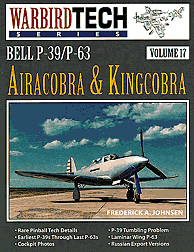
Check my review of the Warbird Tech P-39/P-63 Airacobra & Kingcobra – it’s a good introductory source of information on the P-39, and invaluable to anybody building either of these kits. Also check out my review of Attack of the Airacobras - a book that proves this plane is far more than the Army Air Force and the RAF thought it was ... (both reviews can be found at my blog, Barnett on Aviation)

Sunday, March 02, 2008

Crandall's Master-Work - the Fw 190 Dora D-9 (Volume 1)


Jerry Crandall is an aviation historian of no mean skill - he's worked pretty much his entire adult life capturing the life stories of German WW-II aces, publishing books of exceptional historical value and working with the History Channel and A&E networks. He could often be found supporting others (often financially) as they try to ply the aviation history trade, or underwriting the memoirs of surviving-but-aging Luftwaffe Experten.

Along the way, he's authored a number of books - but nothing to match what I choose to see as his life's work: "The Focke-Wulf Fw 190 Dora - Volume 1." By any standard - from content to production values - this is a remarkable book, especially if you're an aviation modeler or military historian/history buff. It's got literally everything - and this is no exaggeration.

The D-9 was the first operational German fighter to really match the rugged power of the late-model American P-47 Thunderbolt or the RAF's ground-chewing Typhoon. With a massive and powerful engine (originally developed for a bomber) on a stretched fuselage with extended wings, the Dora-9 gave the impression of size and power often lacking from the Luftwaffe's more diminutive fighter aircraft. And, like the Thunderbolt, it would climb like a homesick angel and was at it's best at high altitude ... which didn't stop it from providing effective top-cover for the Me 262 jets during their high-vulnerability landings and take-offs ... or in last-gasp low-level strikes such as Operation Bodenplatte. It was maneuverable at all altitudes, with impressive acceleration and a hard-hitting cannon armament. It was also way too late - thank God!

Readers of this blog know that I try to put the subject matter into historical perspective. By September, 1944, when the D-9 began to be delivered to squadrons (and to be very poorly received, as Crandall notes, quoting skeptical Experten) only the most delusional among the Germans could honestly believe that victory could be salvaged from the debacle Hitler had created. An unstoppable Soviet army - hell-bent on revenge and conquest - was grinding up Germany's eastern front army, and the Western Allies - having come ashore in Normandy and Southern France were in Belgium and sidling up to the West Wall, Germany's version of the Maginot Line.

Yet designers and pilots alike did not let impending defeat dampen their enthusiasm or patriotism. As an aside, it always amazes me that dictatorial regimes can command such devoted patriotic loyalty - both Stalin and Hitler did - and I have to assume that the real loyalty was to the Fatherland (Vaterland) or Motherland (Rodina) rather than to the regimes themselves. This was certainly so of the designers of the Dora-9, as well as of the pilots - old hands and fresh meat alike - who were tagged to fly this potent new fighter.

Prototype design had begun in 1942, and if the Luftwaffe had gotten their thumbs out and pushed through this exceptional design, the fate of the 8th and 15th Air Force bomber fleets might have been much different. Considering that the 8th AF's bomber crews suffered more casualties than the entire US Marine Corps during the entire Pacific War, this is saying a lot. In 1942, Germany had aircraft that could have really dented the bomber streams, day and night - the Fw 190D-9 during the day and the world-beating Heinkel He 219 Uhu (Owl) at night - yet they were denied the construction priorities needed to give the Luftwaffe the best fighters in the sky. Even without the jets and rockets (which also could have been in squadron service much earlier), Hitler's Luftwaffe had - potentially - the aircraft (and certainly the skilled pilots) in 1942 and 1943 to have made the Allied bombing offensive prohibitively expensive in terms of men and equipment. But they didn't, and as the son of a veteran, I'm just as glad that Goering's Luftwaffe purchasing commission was so incredibly inept.

By September '44, the war was lost - but the bleeding had another eight months to go, and especially in the hands of a skilled warrior, the newly-arriving Fw 190D-9s helped to contribute to that bleeding. While - with it's potent cannon armament - the Dora-9 was an effective bomber-destroyer - it's forte was mixing it up with the best of the Allied long-range fighters on at least equal terms.

Back to the book.

I am both a modeler (and IPMS life member) and a military historian. I've been writing about military aviation since 1972 and talking about it on The History Channel since 2000 - which means I've read a lot of exceptional books on military aviation. I'd rank Jerry's new book (which is volume 1 - volume 2 is still in production, but looks gorgeous) at the very top of the list. This book has it all:

  • Production history, from prototype to final production
  • Variations - such as an analysis of the five known cowlings (vital for modelers)
  • Pilot evaluations and observations on their use of the Dora in combat
  • Incredible art - one sample's here in the blog, but there is far more art (72 profiles)and color photos than you'd expect
  • Detailed discussion of controversial late-war colors as worn by the Dora
  • Detailed drawings pointing out differences between the D, the D-9, and the D-9 with the Ta 152 tail (among many others)
  • More than 400 photos - most of which you've never seen - nearly 50 of these in color
  • Scale drawings by masters at their craft
  • Photos to inspire hundreds of diorama ideas - like the Blue-9 with an American GI in the cockpit or sitting astride the propeller's spinner or bellied-in wrecks (that show you the D-9's wooden props don't bend, they splinter)
  • Lots more in its 350 or so 9x12 pages, but you get the point
Not surprising, Eagle has decals also available to go with this book - remarkable 1/32nd D-9 decals of planes illustrated in the book - more than enough to get me to dust off my Hasegawa kit and see what I can do to bring out the detail inherent in this book. As noted elsewhere, Eagle-Cals are as good as the best in the market - accurate to a fault, easy to use and thin enough to snuggle down on details, giving them a painted-on look.

Back to the book. Jerry Crandall has found either pilots or the notes they left behind - you get a driver's eye view of the D-9; its foibles and manifest strengths. You'll even learn about the Fw-190D-9 that was "shot down" by an errant partridge during Operation Bodenplatte on January 1, 1945 - usually referred to as the Luftwaffe's last gasp (which is extensively covered as well). And you'll see remarkable photos that have the potential to inspire a thousand dioramas and vignettes. Historical aviation fan or serious modeler, this book is for you.

You can order this book from the publisher - Jerry's Eagle Editions - at: http://eagle-editions.com/dorabook.htm

Wednesday, February 14, 2007

New Mosquito Book Captures Essence of Elegant Multi-Mission Aircraft

de Havilland Mosquito - an Illustrated History
Crecy Publishing (dist. in USA by MBI, and available on Amazon)
Review by Ned Barnett
Review copy courtesy Crecy and MBI


The new Mosquito book (de Havilland Mosquito - an Illustrated History) by Crecy arrived today, and though I'm on deadline with a client, I just spent two enraptured hours browsing through it - reading some of the chapter introductions and not less than a hundred or so captions. The book is mostly previously unseen photos and remarkably detailed (I mean REMARKABLY detailed) captions. Never seen anything quite like it.

I cannot believe that any modeler wanting to build a Mosquito could do so without this book - it has details beyond galore, markings I'm not used to seeing on RAF aircraft (American-style nicknames, mission-marks, etc.), battle damage, weird offshoot uses ... everything - including a special section on the anti-sub version with a 57mm (aka 6-pounder) cannon.

As for historians, no one can really understand the operation of this magnificent flying machine without wading deep into the operational specifics of individual aircraft, and this book does it in spades. A final "thank you" to the author - those war-time de Havilland ads are eye-poppers - one of them showed the aircraft at an angle that made me immediately realize how much later DH aircraft (the NF Sea Venom is what I'm thinking of) were based on the design work of the Mosquito - but all show a real taste for the wartime nature of Britain, one I found enchanting (as I did all those photos of the UK's own "Rosie the Riveters" building the Mosquitos).

Cap that off with the clear superiority of Crecy book manufacturing standards (remember, I've worked with a half-dozen publishers and had nine of my own books published - and I wish any of my publishers or publisher-clients did half so good a job at producing a fine-quality product), and this is a remarkable, fantastic book.

Bottom line - if you have any interest in the Mosquito - you NEED this book. Distributed by MBI in the States, Crecy in the UK and who knows in Oz and elsewhere - but on Amazon and certainly well worth picking up.

I'll publish a more detailed review later - but this is too good to wait.

Sunday, February 04, 2007

A Reign of Bombs – Ju 87 Stuka: King of the Dive-bombers


Reviews of Two Books:

Hitler’s Stuka Squadrons – The Ju 87 at War 1936-1945
John Ward – Motorbooks International (MBI)

Stuka Volume 1
Luftwaffe Ju 87 Dive-Bomber Units 1939-1941
Peter Smith – Luftwaffe Colours/Classic Colours (an Ian Allen Imprint) – Specialty Press


Review by Ned Barnett
Review copy of Hitler's Stuka Squadrons from Reviewer
Review Copy of Luftwaffe Ju 87 Dive-Bomber Units 1939-1941 courtesy Specialty Press


The Ju 87 Stuka is the ultimate “transitional-era” aircraft – though it replaced a single-seat biplane ground attack aircraft (the Hs 123, which itself was called back into combat service in 1941 by a desperate Luftwaffe and used until 1944), it was barely “modern” in and of itself. Yet it kept soldiering on because there was nothing better to replace it. Like the American DC-3 airliner/transport (which served the military as the C-47 from World War II through Vietnam – where it fought as an armed gunship more than 30 years after it first went into production), the only replacement for a Ju 87 was another Ju 87.

Ground attack versions of the exceptional Focke Wulf Fw 190 “Butcher Bird” were remarkable aircraft in their own right – and might have replaced the Ju 87 in the ground attack role (but never the dive-bomber role – they had no dive brakes and couldn’t fairly be considered dive bombers – except that the Ju 87 was re-armed with a pair of 37 mm anti-tank flak cannons that were too large for the sleek, diminutive Focke Wulf fighter.

The dive bomber itself is a largely American Naval invention, refined and tested by the US Marines during “gunboat” wars against Central American “banana republics” such as Nicaragua. The type was quickly adopted by the equally naval-minded Japanese and became a “hit” at an early-30s depression-era air shows, where Germany’s top-scoring surviving WW-I Ace Ernst Udet saw it demonstrated at the Cleveland National Air Races airshow. Using his political muscle, he arranged for the German government two buy two Helldivers from Curtiss – these were shipped to Germany and Udet demonstrated them himself. One he crashed (not uncommon for the headstrong but hardly meticulous 62-kill ace); the other he kept as his personal plane until the war broke out, when it was donated to a museum – but the impression he made ensured that Germany added “Stuka” to it’s growing list of must-have aircraft types for it’s still-clandestine air force.

The Ju 87 Stuka (the name “Stuka” is a slang abbreviation for a long run-on German word meaning diving bombing aircraft – and generic to all dive bombers, but always associated with the Junkers Ju 87) was born in the mid-30s, in a Germany starved of good aircraft engines. It was therefore initially developed a clumsy-looking single-engined dive-bomber with enormous “trouser” landing-gear fairings and a 600-class horsepower engine that made a lightly loaded Ju 87 barely capable of taking off – at full weight, the air gunner had to be left on the ground if the Stuka was to take off at all.

Three copies of this very much “interim” type – the A (Anton) model – was tested in Spain during the Spanish Civil War – and despite the aircraft’s limited bomb capacity (about 500 lbs) and biplane-level cruise speed, the Stuka proved its worth as a pinpoint bomber of discrete targets. In combat tests, these early Stukas routinely put their bombs within a half-dozen yards of their target – acceptable accuracy for today’s laser-guided bombs, and unheard-of in the 1930s.

Like all visionary designs, the Ju 87 had inherent growth potential – it was quickly upgraded in the B (Bertha) model to feature a 1,000-plus horsepower Junkers inline engine – later further upgraded to 1500 horsepower in late D (Dora) and G (Gustav) models of the dive bomber. Unlike the Messerschmitt Bf 109, which experienced similar power upgrades, the Ju 87 did not become faster – it never cruised at much over 200 miles per hour when loaded, even in it’s most advanced version – but instead the bomb load rose from 500 pounds to upward of 2,000 pounds – and in a few rare cases (seldom used) to 4,000 pounds.

Alternatively, the three puny rifle-caliber machine guns soon grew to a pair of them covering the rear quadrant (the Mg 81Z twin-barrel machine gun) and heavier 20mm or 37mm guns facing forward to rain cannon shells on tanks and other ground vehicles. In addition, as the Ju 87 evolved, it doubled its combat radius and enhanced protective armor features to enable it to survive in the ground attack role.

A quick look-see comparison suggests that the Ju 87 was in the same performance class as the RAF’s Fairey Battle – a rightly-despised death-trap and one of the more ill-conceived combat aircraft of all times – but in fact, the Ju 87 was a better combat aircraft. Although it had archaic-looking fixed landing gear (the Battle had retractable gear) the Ju 87 could carry a single large bomb – the Battle was cursed with carrying a gaggle of ineffectual small bombs. The Stuka was remarkably maneuverable – by any standards, a fact that often surprised and sometimes endangered attacking fighter aircraft – and it was remarkably sturdy as well, capable of absorbing significant battle damage. The RAF’s Battle could be shot down by the proverbial “dirty look” and it flew like an out-of-tune furniture-moving truck (“mobelwagen” in German).

The misnamed Battle fulfilled its best destiny by providing harmless anti-aircraft target practice for front-line German Flak units – but the Ju 87 actually continued to viably destroy enemy targets through 1944. Just as The Battle of France proved that the Fairey Battle could not survive without escort fighters (though it remained extremely vulnerable to Flak), The Battle of Britain proved that the Ju 87 couldn’t stand against fully modern fighters such as the Spitfire without heavy fighter escort. However, Germany could provide that fighter escort – and that made the Stuka viable over Soviet Russia at least through the end of 1943, when growing Soviet Air Force strength forced the Luftwaffe to shift most ground-attack duties to Fw 190s and to operate the Stuka either as a night-attack aircraft of as a high-risk ground-hugging tank-buster.

In fact, operations in Russia proved that the Stuka was really more contemporary with the Ilyushin IL-2 Sturmovik, another dedicated two-seat ground attack aircraft. On the Allied side, the closest we came was the ungainly Fleet Air Arm Skua and the world-famous ship-killer, the US Navy’s Douglas-built SBD (Slow-But-Deadly) Dauntless. However, while the SBD continued to soldier on until 1945 (though the replacement Curtiss-built SB2C Helldiver was available beginning in 1943), it never took on ground targets in fighter-contested skies, and after Midway, it seldom if ever flew anti-shipping strikes without heavy USN fighter escort.

The SBD – considered obsolescent and due for replacement in 1941 when the war broke out for America – was at least one generation ahead of the Ju 87 in terms of design features. It was faster, more heavily armed (until the Ju 87s started carrying tank-buster 37mm Flak cannons) and could always carry a 1,000 pound war-load as standard (and could, in a pinch, on very close-range missions, carry a one-ton bomb). Like the Stuka, the Dauntless was surprisingly maneuverable, and with twin rear-facing machine guns (and two forward-firing heavy .50 caliber Browning machine guns) more heavily armed. During Coral Gables and Midway – until the USN woke up and started carrying more fighters onboard their carriers – SBDs were routinely used as low-altitude anti-torpedo-plane fighters, and in the right hands, these dive-bombers had some success (even a few surprising successes against the rightly-feared Japanese Zero). But of the dive bomber and ground attack planes of its mid-30s generation, the Ju 87 stood out alone as the best-of-breed.

Early European combat in the Ju 87 proved it to be a fearsomely-accurate weapon – a fact the Germans enhanced and capitalized on by adding a pair of permanently-mounted sirens (Jericho Trumpets) as well as noisemakers affixed to the fins of the Ju 87’s main bombs. The noise was petrifying and demoralizing – until you got used to it (at which time the Germans removed the sirens as added drag without added benefit) – and over Poland, France and the Low Countries (and again over the Soviet Union) the Stuka was both deadly and unstoppable.

Only when faced with RAF Spitfires and Hurricanes over Southeastern England did the Stuka “meet its match” – and author John Ward contends persuasively that the Germans might have won that pivotal battle if Goering had been willing to either provide more protection from escorting Messerschmitts or suck it up and take the losses – the Stukas were about two days away from knocking out the Chain Home radar picket line and the RAF’s most critical front-line fighter airfields. However, the Germans withdrew the Stuka – and changed their tactics from knocking out the RAF to “punishing” London – and found too late that London could take more punishment than Ventnor Island’s radar station or Biggen Hill airfield.

Over Russia in the early days, the Stuka reasserted it’s primacy as a dive bomber – and bombing aces such as Hans-Ulrich Rudel (ultimately the most decorated single individual in Hitler’s Germany). Rudel was an “iron man” who flew more than 2,500 missions and destroyed more than 500 tanks, along with sinking a Russian battleship and creating havoc beyond measure in the ranks of the Red Army. He finished the war flying ground-attack Fw 190s with one foot amputated (and not yet healed) and the other in a cast. A defiant and unrepentant Nazi to the end, Rudel was nonetheless the epitome of combat pilot, and long after everyone else had given up on the Stuka, he still found it a viable and effective tank-killer. His book, “Stuka Pilot,” cannot be too strongly recommended for those who want to see what combat flying for Hitler against Russia was really like.

Which brings us to the two new books on Stukas which I’m reviewing here.

The Classic Colours book (Ian Allen/Specialty Press) is an excellent example of what this series delivers best – lots of photos which illustrate (with the help of extremely useful captions) the color schemes and color variations to be found in the aircraft in question – in this case, the Stuka. The text is useful but hardly world-beating – except for the sidebars on individual Stuka pilots, which I found very informative – for me, worth the price of the book, as they gave an operational insight most other 100-page one-aircraft books tend to lack.

The Classic Colours Stuka (Vol.1) book has 96 pages with probably 200 photos and a useful narrative text that makes it more than a picture book. If you’re going to model an early version of the Stuka (Anton, Bertha, the carrier-capable Caesar or the extended-range Richard), you’ll want this book at your side to help you identify features missed by the kit manufacturers and to accurately mark your finished model.

The last Stuka I modeled (not counting a 1/144 scale Stuka used as a “gate guardian” on an N-Gauge model railroad “empire”) was the old Revell 1/32nd Bertha – converted to a carrier-capable Caesar (C-0, used in Poland in combat) with catapult spools and an arrestor hook, then back-dated with older exhaust ports and other refinements to make it the carrier-version of the pre-production B-0 and early-production B-1 Stukas. If I’d had this book in hand, I’d have done a better job on both the modifications and the color scheme, though both were more than adequate for a 1970s-era kit build.

Today’s modelers demand more research and more accuracy, and the Classic Colours book on the Stuka (Vol. 1) will give modelers just what they need.

The Motorbooks (MBI) book by John Ward, Hitler’s Stuka Squadrons – The Ju 87 at War 1936-1945, is a far more ambitious book – and it more than amply fulfills the author’s most sanguine ambitions. It is a 224-page developmental and operational history of the type – filled to overflowing with photos, featuring side-profile drawings of the various versions (complete with operational specs that are mostly on-target based on my standard references, Green’s “Warplanes of the Third Reich”).

Some of the photos here overlap those in the Classic Colours book – a few are the hoary old chestnuts we’ve been seeing since Hitler invaded Poland, but some photos found in both are new to me, suggesting that they’d come from recently declassified ex-Soviet photo archives. True or not, it is great to see new photos, and Ward’s book has hundreds of clear, detailed new-to-me Stuka photos.

The photos are worth the price of admission – whether you’re a modeler or a historian/aviation buff – but the text on the aircraft’s development and operational deployment will really, really (and I mean really) strike a positive note with the armchair historian and aircraft buff. I literally couldn’t put it down – and considering how many aviation books I devour (and how many I put aside unfinished), this is high praise indeed, and well-earned.

I particularly appreciated Ward’s analysis – I never before heard how close the Stukas came to delivering a death-blow to the RAF (and I’ve read a lot of Battle of Britain books), nor did I realize how effectively the Stuka was reborn over Russia (or how effective even a handful could be when air superiority was first achieved. I think I liked most the fact-based analysis and explanation of how relatively low numbers of Stukas could do so much war-winning damage in 1939-1942. This put the plane in a new and welcome perspective, and made the book every bit as good a read as it is a resource for modelers and researchers.

Bottom line – both books come highly recommended, though for somewhat different reasons. They cover the core material differently enough – and in sufficient depth – for me to be able to recommend both of them as a kind of “tag-team” – historian, buff or modeler, the pair of these books will serve you better than either one standing along.

Wednesday, January 31, 2007

Sweet Nutcracker - Hs-129 Tank Killer (or, Everything That Was Wrong About the Luftwaffe in One Single Aircraft)


Henschel Hs-129 In Detail
By Denes Bernad
Specialty Press/Midlands Books
Review by Ned Barnett
(review copy provided by Specialty Press)


The Henschel Hs-129 tank-killing ground attack aircraft is one of those remarkable wonders/blunders that have always – to me – defined the Luftwaffe. Innovative in concept, this plane is a classic example of a great design that was botched in execution. Pummeled by bureaucracy and political in-fighting; the Hs-129 was nonetheless effective in combat. And most important, it was a classic Axis example of too-little, too-late.

As an aircraft, the Hs-129 has always fascinated me. From the early Profile publications and the contemporary Airfix kit to the later and larger-scale kit by ESCI, this plane has always intrigued me. It had the weapons, but not the power to really make use of those weapons. Limited horsepower forced bizarre (to me) design choices that are part of the aircraft’s charm, and part of the reason it so utterly failed to make a difference in aerial combat. Now, thanks to Denes Bernad and Specialty Press/Midlands Books, I have been able to be reacquainted with this bizarre precursor to the A-10, Su-25 and MiL-24 dedicated anti-tank ground attack aircraft. For the historian, this book focuses on technological development without focusing over-much on operational use; for the modeler, it is pictures and drawings and text that make it possible to create wonderful models of a variety of special-purpose versions of the Hs-129.

I’ll go so far as to say this: If you want to understand German design philosophy (and the equipment shortfalls that influenced that design); if you want to understand how the Luftwaffe’s command did so much (through indecision and constant change-orders) to assist the Allies’ eventual victory – or if you want to build a superbly-accurate model of this aircraft, you need this book!

But before I go farther into the book, let’s look at the plane and its protracted and frustrating development – and a bit, too, on its remarkably small production run.

The Luftwaffe – along with the Soviet VVS and the Italian Regia Aeronautica – had the opportunity to stage a combat dress-rehearsal for World War II in the blood-soaked skies over Spain. Many lessons were learned – some legitimate, some not.

On the “mistaken” side of the ledger, the Soviets “learned” that the biplane was still viable, and put the I-153 fighter into production in 1939 – a lesson the Italians also “learned” before introducing the CR-42. This “lesson” represented a huge step backwards for the Soviets, who had introduced the world’s first successful retractable-gear cantilever-wing monoplane fighter (and the first 300 mph fighter) six years earlier. In 1935, the Soviets had in operational squadrons the I-16, the most advanced fighter in the world. Equally mistaken, the Germans “learned” that the fast medium “strategic” bomber would always get through, without the need for long-range escort fighters or heavy on-board defensive weapons. So they canceled General Wever’s planned “Urals Bomber,” ensured that the Bf-109 was more a long-range intruder than a viable escort fighter, and “protected” their bombers with a few puny rifle-caliber machine guns. Four years later in the skies over Southeastern England, the Luftwaffe learned their mistake – too late to win the Battle of Britain, but still in plenty of time to lose the war.

However, the Germans did learn a few lessons worth knowing – improved versions of the Bf-109 and the Ju-87 were the result of those lessons, as was the value of “terror-bombing” of unprotected cities. Warsaw in 1939, and Rotterdam and Coventry in 1940 were just tactical extensions of Guernica. But an often-overlooked lesson the Luftwaffe learned was the value of a dedicated ground-attack aircraft in the critical army-support role. The elegant Hs-123 biplane proved adequate in this role in Spain, but Germany knew that a bigger, better and more heavily-armed plane was needed (and so did the Soviets, who learned the same lesson and began developing the war-winning Sturmovik). In 1937, the Germans began the development of one of the world’s first dedicated ground-attack machines – a logical extension of the world’s first ground-attack aircraft, the armored and heavily-armed German Junkers J-1 of WW-I. This was the visionary concept. How it was executed becomes the “botched” part of the equation.

Several manufacturers competed for the production prize – but only Henschel started with a clean sheet of paper, and their design won because it most closely met the Luftwaffe’s requirements. The armored ground-attack version of the Fw-189 was a remarkably similar design to the Henschel, but it was bigger – and because it had the same puny Argus 440-horsepower engines – it performed less well. However, even the from-the-ground-up attack Henschel – created with those two one-lunged Argus engines in mind – was underpowered to a remarkable degree.

I’d like to make a brief aside here and talk about the importance of aero-motors in the creation of war-winning aircraft. Too often, the importance of having the “right” engine is overlooked – or just assumed. In the U.S. especially, we had enough engine manufacturers, each striving to build engines to meet specific needs (some big and powerful, some small and efficient), to ensure that we had engines for all military aircraft purposes. Hell, we even powered many of our WW-II tanks with aero-engines – Wright Whirlwinds, for instance – while still building 100,000 planes a year for ourselves and our allies.

Consider radial engines (a comparison I use because the Hs-129 was radial-powered). We started the war with engines in the 1,000-horsepower class which quickly grew to 1,200 horsepower and ultimately almost up to 1,600 – the R-1820 started at about 700 hp in the early B-17s, and wound up at 1,475 hp powering the “Wilder Wildcat” – the Grumman/Eastern FM-2. The R-1830 grew in much the same fashion. A step up, our R-2600 radials went from 1,600 hp in the early B-25s and TBFs up to 1,900 hp in late-war aircraft; and a further step up was the R-2800, which grew during the war from 1,900 to about 2,500 hp – and powered the B-26, A-26, P-47, F4U, F6F and other war-winners. At lower power levels we had engines to power our trainers and utility aircraft, but no American war-built plane had to enter combat with engines rated at below 1,000 hp, even at the start of the war.

The Soviets had a similar range of engines – they never had to face the problem of fielding modern combat aircraft with under-powered engines. The Brits did not have that choice – at least not early in the war – and they had to send into combat planes like the Blenheim, with engines under 1,000 hp, when the Blenheim needed at least two 1,200 hp engines to have a prayer of performing its mission. Compare that sad-sack aircraft to the American A-20 – the Havoc had a smaller crew, a heavier defensive and offensive armament, a larger bomb-load and a longer range. This added performance was thanks to its powerful R-2600 engines, which at 1,600 hp, gave the A-20 a 300-mph-plus top-end speed, even combat-loaded. The British engine problem was due to misguided government policies and a too-small civilian flying industry base to justify creating better radial engines – it didn’t help the Brits that pre-war, American engines were so readily available, as well as so reliable.

The Germans, unlike the Brits, could at least blame the Versailles Treaty for their woes. The cause was different, but the results were the same – a limited selection of mostly old-design (hence heavy for the horsepower produced) and low-powered radial engines. To be sure, the BMW (Bavarian Motor Works) company produced an excellent high-horsepower radial – it powered the Fw-190, for instance – but between the top-end BMW and the very low-powered engines designed for primary and basic training aircraft, the Germans had nothing in the middle. So instead of designing a ground attack aircraft with a couple of 850 hp engines, in 1937 Henschel created their Hs-129 around a couple of 440-hp Argus engines. Even when horsepower was upgraded in the early ‘40s, they didn’t go to 1,000-to-1,200 hp radials – what I consider to be about the functional minimum for this aircraft, considering it’s mission – but did the best they could with a couple of hand-me-down French Gnome-Rhone radials of about 800 hp each.

The US Navy’s new TBF single-engined attack aircraft – which entered combat at about the same time as the Hs-129 – had a 1,600 hp R-2600 engine. The roughly mission-comparable (to the Hs-129) US A-20 two engined ground-attack aircraft, which was designed at the same time as the Hs-129, but which saw combat far earlier, had a couple of 1,600 hp R-2600 engines – twice the power of the revised and upgraded Hs-129 B, which had two hand-me-down French-built Gnome-Rhone 800 hp radials. Is it any wonder that the Hs-129 was defined by its compromises and performed like a dray wagon instead of a hot-rod?

A comparison between the A-20 series and the Hs-129 series is useful. Both twin-engined ground-attack aircraft began as 1937 design studies, both completed production in September of 1944, and both were heavily influenced by lessons from the Spanish Civil War. Douglas first considered a pair of 450 horsepower radial engines for its 7A design, before rejecting that design as being grossly underpowered for the mission. Later in 1937, Douglas upgraded the design to model 7B, which featured a pair of 1,100 hp R-1830 Twin Wasp engines, while Henschel stayed with the 440-hp engines through at least 1940.

The US Army Air Corps was budget-strangled in the late ‘30s, but the French ordered 270 of this potential world-beater as the DB-7, specifying 1,000 hp versions of the R-1830 engine, those these were soon switched back to the more powerful 1,100 hp versions of the Twin Wasp radial. Before the first production Hs-129 flew – with puny 440-hp engines – the first 64 production DB-7s were entering combat with the French Air Force in the anti-tank role. Some of these remarkable first-version of the A-20 survived to the end of WW-II, seeing combat against isolated, cut-off pockets of German forces stranded in France in late ’44 and early ’45.

After these first combat models proved the design’s value, the A-20 series was upgraded again, being mated to the superb 1,600-hp R-2600 engine, ensuring that by the time the upgraded Hs-129 entered combat, its nearest American rival would have exactly twice the base horsepower. Germany knew this was a problem – they wanted to give the Hs-129 an engine in the 1,200 class – but it had none to give. Eventually they settled on an Italian engine design – only to have Italy drop out of the Axis. However, this was in late ’43, at a time when the A-20’s replacement – the A-26 (with more than 4,000 available horsepower in two combat-proven R-2800 radial engines) was already in production.

I haven’t focused on in-line engines – Germany had several good ones, including engines in the right horsepower class for the Hs-129’s mission – but those were all completely committed to more viable combat aircraft and were never considered for the Hs-129. The Daimler-Benz DB-600-series engines were excellent, but they were committed to powering the Bf-110 Zerstorer and the Bf-109 fighter. The similarly high-powered Junkers Jumos were another excellent series of engines used primarily in bombers. The British had an abundance of good inline designs – as well as a few major disasters. While it’s true that engine design flops killed off the Manchester and the Whirlwind, the latter the world’s first four-cannon, 400 mph fighter, the Brits also developed the Merlin and the Griffon – two exceptional engines used in high-altitude interceptors and low-level ground-attack aircraft.

However, the Soviets had production capacity to spare (as did the Americans) – even while relocating their factories to the frozen steppes of trans-Urals Siberia – and had good-quality inline engines that were major improvements over the foreign designs on which they were based. The Soviets were able to power the single-engined ground-attack Sturmovik with a powerful, 1,770 hp Mikulin Am-38F liquid-cooled inline piston engine. America also had an abundance of inline engines – Packard-built Merlins and home-grown Allison V-1710, an often-underrated engine that performed well below 20,000 feet – and, when turbo-supercharged, continued to perform well on up to 40,000 feet. At the time the Hs-129 was being redesigned for the 800-hp Gnome-Rhone, the Allison was reliably producing 1,200 hp.

Another factor often overlooked is production itself. Many historians marvel at Germany’s ability to produce huge numbers of combat fighters, even late in the war – more than 30,000 models of the Bf-109, for instance, were manufactured. However, a closer look shows that this productivity was achieved at a sacrifice – other aircraft were shelved altogether or produced in quantities that would have the Allies laughing in smug self-satisfaction. The Hs-129 – for all it’s flaws – was still a competent ground-attack aircraft. It was capable of destroying tanks at a time when the Panzer forces were being overwhelmed by huge numbers of qualitatively competitive Soviet tanks – but it was never available in quantities sufficient to need.

From 1942 to September 1944 – when production ceased for political reasons – Henschel produced only 1,168 Hs-129s (and of those, more than 100 never left the factory). To put this in comparison, during a single three-month period in 1941 – long before US aircraft production hit it’s stride – Curtiss produced nearly that many copies of the Tomahawk – the British name for early-model P-40s. Britain received so many of these excellent machines so fast that it was able to give 100 to China – mounts for the soon-to-be-legendary American Volunteer Group (the Flying Tigers) and several hundred more to the hard-pressed Soviets, even as they waged a pitched battle with Rommel in North Africa. Focusing merely on ground attack aircraft, Douglas produced 7,098 A-20 series aircraft before production ended in September, 1944 – the same month that production ended for the Hs-129. These A-20-series aircraft were used against the Germans by the French, the British, the US Army Air Corps and by the Soviet Union. They were roughly 100 mph faster than the Hs-129, and could carry roughly twice the bomb load, and could carry that load twice as far (though the British considered it “short-ranged.”). This was not the only Western Allied ground-attack plane – the P-47, the Hurricane and the Typhoon both performed yeoman’s work in ground attack, and the P-51 and Spitfire (though more vulnerable) were also big successes in the ground-attack role. The P-47 could easily carry twice the Hs-129’s ordnance load, well more than twice as far, and at three times the speed – but it wasn’t even a dedicated ground attack machine. For a dedicated tank killer, other than the A-20, we need to look at the Soviet Sturmovik.

Though it had a single engine, the Sturmovik is the most comparable of aircraft to the Hs-129. Both were designed as ground-attack aircraft, and both were initially designed as single-seat aircraft. Both could carry machine guns or auto-cannons capable of defeating tank armor. They had similar top speeds (just above 250 mph) and range (400 miles). Both were heavily armored against ground fire.

However, there the comparison breaks down. The Sturmovik – more formally, the Ilyushin IL-2 – had a single engine with more power than both of the Hs-129’s engines – twice the power, but half the drag. However, the real important factor here was in the production of the two aircraft. As noted, around 1,050 Hs-129s were produced and delivered – roughly 1,000 were eventually distributed to combat units. The story was somewhat different for the IL-2: a total of 36,163 IL-2s were built, making it the single most produced military aircraft design in all of aviation history. If Germany was to have a chance – given that the Soviets were producing more T-34 tanks in a year than all the German tank production of the entire war – then the Luftwaffe needed to procure and issue to combat units the Hs-129 in Sturmovik-like numbers. In the US, a plane built in numbers as low as the Hs-129 would never have been issued to combat units – in those quantities, the logistics of keeping such a small fleet was not considered worthwhile. But the Germans tried to make use of every Hs-129, trying to make dozens perform like hundreds, and hundreds to perform like thousands.

The plane could have been produced in greater numbers – though even 2,000 seems a stretch – but the RLM – the Luftwaffe ministry assigned to order and monitor aircraft production – kept changing it’s collective minds. The stop-and-start-and-stop-and-start priority fluctuation is nothing short of amazing. The Henschel plant was first ordered to switch to Ju-188s, then to switch back to keeping the Hs-129 production line flowing. Later, with 100 machines nearly ready for delivery, the RLM said, “scrap them all – we need Ju-388 strategic bombers.” So Henschel did, though they never got enough machine tools and pattern dies to make even a single Junkers. At best, the Henschel factory worked at 65 percent capacity, though even 100 percent wouldn’t have been enough to turn the tide. Production crawled for nearly three years on what was basically a simple, low-tech, easy-to-manufacture aircraft. Ilyushin produced as many Sturmoviks in the average month as Henschel’s Hs-129s were manufactured and delivered during all of World War II.

In combat, the Hs-129 primarily saw service against the Soviets – however, a few were assigned to North Africa, a few trainers based in France might have flown combat missions against the Western Allies (note – this is pure speculation – the training squadrons were based on France in early ’44, so it may have been that they saw limited combat operations after Overlord, but that’s not been confirmed, at least not yet). And Rumania, which also flew the Hs-129, had a couple of dozen planes still in operation at the time when Rumania left the Axis and joined the Allies – these then flew to the end of the war in service against the Germans.

However, the vast majority of these Hs-129s flew against the Soviets in the 1942-1945 timeframe. In spite of negative comments by test pilots, those who flew the Hs-129 in combat praised it to high heavens. Perhaps it was the heavy armor plate, which helped them survive attacks that would have defeated any other plane in the sky – except, perhaps, for the extraordinarily well-armored Hs-129 – though surviving reports praise the plane’s low-level maneuverability and performance. Apparently, they didn’t mind having the engine instruments mounted on the engines – not inside the incredibly-cramped and superbly-armored cockpit – or perhaps they so enjoyed smashing Soviet armored fighting vehicles (which the Hs-129 could do with ease) that they overlooked all the other planes’ obstacles.

All of which is prologue to my review of the book, Henschel Hs-129 in Detail. This is a great book – useful for those fascinated by mil-tech, and absolutely essential for anyone contemplating the building of a model kit of the Hs-129. I build the old ESCI kit years ago, and now that I have this exceptional book in-hand, I plan to build the modern Hasegawa kit. It should make an interesting complement to my new Eduard IL-2 Sturmovik kit – both are in 1/48th scale, large enough to do justice to these heavily-armed and –armored ground attack aircraft.

I first became fascinated with the Hs-129 when I read the old (late 60s) Profile Publication on this mixed-bag aircraft. When I first opened this book, I thought it would be a “super-Profile” – but I was wrong in one or two important areas. These don’t distract form the book – they define it. Profiles covered design and combat utilization – this new book covers only the design, construction and modification of the Hs-129. There is virtually no mention of combat operations – nor was there any such intent. This book is a technical reference, ideal for the historian or modeler – my lord, between the intense quality of the photos and the many reproduction from factory manuals and Luftwaffe manuals, a modeler who couldn’t super-detail an Hs-129 kit based on this book Just Isn’t Trying Very Hard. In addition, while photos are not there for all sub-variants, the recoilless mortar fired by photo-sensitive sensors would be as spectacular to model as it would be to see it fire. The mention of a flame-thrower-equipped version already has me thinking about ‘conversions.’ There are more, but I trust this is enough to whet the appetite of any normal plastic-basher.

Specifics – 96 magazine-sized pages, probably 3-5 photos per page (most in B&W) – a smattering of color profiles, lots of break-out chart with weights-and-measures, performance specs and related information. The text is useful and informative, the captions on the photos are even more useful – but damned hard for these 55-year-old eyes to read without squinting. Diagrams galore – most from official Luftwaffe publications – show everything worth modeling. Frankly, I can’t wait to get the Hasegawa kit, then re-read this book, making careful notes of everything I want to see in my finished model.

Hey Little Kobra Don’t Ya Know You’re Gonna Shoot ‘Em Down?


Attack of the Airacobras
Soviet Aces – American P-39s – The Air War Against Germany

By Dmitriy Loza – Translated By James F. Gebhardt
University Press of Kansas
Review by Ned Barnett
(Review Copy provided by review author)

Why would a World War II Soviet tank crewman write a book about Soviet fighter pilots who used a much-disparaged (at least in the West) and apparently obsolete “transition-era” fighter aircraft? Perhaps because that tank commander served, during the Great Patriotic War, in an American-built Sherman tank. Though he doesn’t make an issue of it (though he does mention it in the introduction), Loza knows at first hand how nearly 50 years of post-war Soviet policy downgraded both the contribution of Lend-Lease equipment … and of the brave Soviet soldiers, sailors and airmen who manned those “officially-despised” but apparently nonetheless essential American and British contributions to Soviet success in the Great Patriotic War.

If that’s not the reason he wrote this book (I think it is), it’s still a good one – and whatever the reason that inspired this old tanker to write about aerial combat, this is a remarkable book about a plane that – by virtue of what the Soviets were able to do with it – has to be one of the most misunderstood and under-rated combat aircraft of World War II, and maybe of all times.

Starting in late 1941 but really ramping up in early 1943, the Soviet Union received nearly 5,000 Bell P-39 Airacobra fighter planes, primarily through America's Lend-Lease program, though the earliest arrivals were hand-me-downs from the UK. The Soviets quickly adapted the planes that nobody else wanted into a remarkably lethal weapon system. This became an odd coupling of capitalist planes and Marxist pilots – a coupling that became uncomfortable to the post-war Soviet Union, leading to many “myth-understandings” about the P-39 in Soviet hands.

This was a classic “transition-era” fighter, built for the last war, not for the next one. Bell developed their P-39 as a short range pursuit (interceptor) aircraft intended to fly coastal defense missions at relatively low altitudes. However, by Soviet standards, the P-39 was equipped with a powerful engine and deadly hard-hitting weapons. In the hands of gifted Soviet fighter pilots – who’d learned to survive in the crucible of war and who “didn’t know any better” than to think that they had a great plane on their hand, the P-39 was able to out-fly, out-fight and eventually dominate the Luftwaffe from the Kuban Peninsula and the Caucusus foothills to Eastern Europe and Berlin.

Primarily, in order to tell this remarkable story in microcosm, this book is a narrative of the operational history of the incredibly-successful 9th Guards Fighter Division of the Soviet Air Force (the VVS) from the time in early 1943 when elements of the 9th Guards first took the P-39 into combat (at a time when the Americans were phasing it out of front-line combat units as fast as possible) to the very end of the war. The 9th Guards had some of the best pilots in the Soviet VVS, including two of the Soviet Union’s four top aces – Aleksandr Pokryshkin and Gregoriy Rechkalov – which suggests something about the men, and about the aircraft they flew so loyally and so well.

In spite of the apparent obsolescent nature of the P-39, the 9th Guards took 354 “Kobras*” into combat in the final battle for Berlin – and scored it’s last two victories, over Prague, on May 10th, two days after the war officially ended.

*“Kobra” is not a term found in this book – however, the term is widely and authentically used in Osprey’s recent book “Soviet Lend-Lease Aces” – where it has the ring of authenticity. This otherwise excellent book is all but bereft of “insider” military slang so beloved of military aviation buffs.

Everybody who’s ever studied the American and British use of American-designed combat fighters in World War II knows that the Brits – at a time when they were desperate for anything that could fly – rejected the Bell Airacobra out-of-hand, sending most of them to the Soviets in late 1941 and giving the rest back, as the Bell P-400, to the Americans, who were even more desperate for modern fighters. The unloved and unwanted P-400 fought in the early days of 1942 over New Guinea – along with some early-model made-for-the-USAAF P-39s – while others performed remarkable service in Guadalcanal, primarily in the ground support role. Other Americans used the P-39 over North Africa and Sicily, but traded them to the French and turn-coat Italians as soon as they could, preferring to fly almost anything else with wings.

However, the Soviet fighter pilots loved the P-39 – but not, as latter-day myth-makers would have it, for it’s supposed ground-attack and tank-busting abilities (hint – the Soviets didn’t have armor-piercing ammunition for the P-39’s 37mm cannon, but they did have AP for the twin 37s mounted in their world-class IL-2 Sturmovik). Instead, the Soviet pilots loved the P-39 as an air-to-air weapon, and fearlessly took it against often superior numbers of Bf-109F and G-model Messerschmitts – or even the against the much-vaunted Focke-Wulf Fw-190s. Those Soviet fighter pilots loved the heavy nose armament – sufficient, even without wing guns (often removed in combat) for shattering the best-protected Luftwaffe fighters and bombers with a single on-target burst of fire. They loved the P-39 for it’s (comparative) long range, and it’s unexcelled cockpit radios – no less a figure than Aleksandr Pokryshkin, the undisputed “Father of Soviet Fighter Aviation” and the number-two Ace in the Soviet VVS in World War II, said that the Kobra’s radio was its best feature. They even loved it for it’s remarkably clear cockpit glazing – something far superior to that produced by existing Soviet technology. They loved the Kobra’s armored protection, they loved its turning ability – and didn’t seem to think it was sluggish or had poor altitude performance. The Airacobra’s abundant liabilities – at least those found by other Allied fighter pilots – either didn’t exist for the Soviet pilots, or they found these “liabilities” to actually be real strengths.

Pokryshkin, who was promoted to Marshal of Aviation in December of 1972 at the end of a remarkable career, clearly thought the Kobra was something special. He scored most of his 59 official victories (more like 72 actual victories) in the Kobra. At the very end of the war – as a highly-respected major-unit combat leader – he literally went to the mats against his political masters (a dangerous thing to do, even for a multiple-winner of the coveted “Hero of the Soviet Union” honor). The Commissars wanted all the Soviet aircraft in the skies over Berlin to be Soviet-built (they wanted all the tanks to be Soviet-built, too, though some of their best units served in “obsolete” Shermans). Pokryshkin put his life on the line – literally – in order to keep his unit flying “obsolete” P-39s in the skies over Berlin. Knowing he’d be going up against the latest fighters in the German armory, flown by the best surviving pilots in the world, Pokryshkin wanted to stay in his beloved P-39 rather than convert to the supposedly superior Yaks and LaGGs. Perhaps he knew something about the diminutive, hard-hitting P-39 that escaped American air-combat “experts.”

Like the Brewster Buffalo and the Curtiss Hawk 75 in the hands of the Finns, P-39 Airacobras – when in the hands of the 9th Guards Fighter Division’s pilots – was a plane without equal. These fighter jocks were among the highest-scoring pilots in the Soviet Union – they fought a long and bloody no-holds-barred struggle against some of the best pilots the Luftwaffe could field (including top-scoring ace Erich Hartmann) – and right up till VE Day, they swore by their Kobras. It’s almost enough to make you wonder if surfer-singers Jan & Dean had read the history of the 9th Guards Fighter Division before they recorded “Hey Little Cobra (don’t ya know you’re gonna shoot ‘em down?).”

This remarkable book doesn’t tell you why the Kobra was so effective in the hands of these Soviet aces – instead, it shows you how this remarkably small fighter made such a big mark in such a huge war. While the book follows a rough chronological combat history – from early 1943 to the end of the war – it doesn’t flow as a single narrative. It reads more like a series of interesting and somewhat interconnected articles – but that’s not a bad thing, as this flexibility gives Loza the opportunity to bring in details of how the VVS operated in wartime – fascinating minutia I’ve seen nowhere else. Do you want to know how many spare/replacement Allison engines the 9th had on hand for the final battle over Berlin – or how they came up with the formula that told the Commissars just how many spares to have on hand? This book spells it out. Want to know about how food supplies were handled – or how gasoline was sent to the front – or how the VVS had its own medical service to ensure that recovering pilots were returned to their own units? This book spells it out.

In fact, in addition to covering aerial combat, this book covers it all. Did you know that the “communist” Soviet Union paid cash bounties (“bribes”) to successful pilots and aircrews – even ground-crews? While – except for the frankly mercenary American Volunteer Group (the Flying Tigers) – the capitalistic Western Allies would never think of (let alone condone) cash awards for combat success, the communistic anti-materialistic Soviets paid out 5,000 rubles for 120 successful combat missions and 1,500 rubles to the man who shot down a bomber. Sink a sub and you get 10,000 rubles. Even the mechanics got “bribed” – 100 missions without an abort was worth 1,000 rubles to a crew chief or engine mechanic – and if 75 percent of a unit’s ground crewmen qualified for cash bonuses, their supervisors were in for a 1,500 ruble bonus themselves. What’s that? The sound of Lenin spinning like a lathe?

While highlighting lots of fascinating facts about the air war over the Soviet Union and Eastern Europe in the last two years of the war, mostly, however, this book follows dozens – maybe hundreds – of individual aerial combat engagements. This is a book about aerial combat, and it delivers on this promise – in spades!

The Leitmotif is clear – outnumbered formations of 9th Guards Fighter Division Airacobras are attacked by (or attack) larger and more powerful Luftwaffe units; and, through superior tactics, the Soviets usually score a 3.5 to 1 victory margin, even when facing 3-to-1 or even 5-to-1 odds. It also shows what happens (in tragic detail) when even the most experienced combat leaders forget hard-won lessons, and pay a staggering blood-price for their lapse in judgment. It’s not all one way; however, after two years of horrendous losses, a particularly brutal kind of Darwinian selection occurred – those Soviet pilots who’d survived the Luftwaffe onslaught flying I-15 and I-16 fighters in 1941 and 1942 were now ready, in 1943, to decimate their hated foe with planes that others felt were – at best – marginal. And, while the Soviet military system had many flaws, the author is at great pains to describe how the success of aces and leaders was passed on to not only green replacement pilots but also to other units across the length and breadth of the 2000-mile front line. When a pilot or a unit found something that worked, the Soviets were – by 1943 – quick to integrate that lesson into combat units from the Kuban to Murmansk.

This book dissects aerial combat in remarkable detail – it’s depth and breadth are little short of stunning – and it is that very depth and breadth that make the notion of the P-39 Airacobra as a competent and competitive war-fighting machine right up until the final battles over Berlin “almost” believable. The Americans and the Brits weren’t wrong. For their kind of warfare, the P-39 was – at best – an also-ran. But in a war where fighter strips were built just five or ten miles behind the front lines – on both sides, the P-39 could thrive. In a war where combat in the weeds was more common than combat in the stratosphere, the P-39 could excel. And in a war where quick slashing hits at bombers or fighters took the place of endless swirling dogfights, the P-39 was a combat-master.

Along with more than 300 pages of fascinating, detailed text, the book has several useful maps, dozens of “I’ve never seen ‘em before” photos, and some tables that will be remarkable to the true WW-II aerial combat buff, including a list of every Soviet ace who scored even one shared kill on a Kobra. That list is remarkably long – and when you read elsewhere the stringent rules followed for confirming kills, you’ll realize that this isn’t propaganda-mill victories, but flesh-and-blood triumphs over the truly hated Germans (and if you don’t really believe that the Soviet-in-the-street hated the Germans no matter how bad Stalin was, read this rampantly non-political book that nonetheless shows the Soviets’ profound and reverent love of the “Motherland” – and makes it clear that to invade the “Motherland” is no different than raping your mother).

The publisher says this is based on interviews with Soviet veterans and extensive access to squadron histories and logbooks – and I believe it. This book is part of the University Press of Kansas’ Modern War Studies series.

A great book – well worth the price: Retail $34.95 – new at Amazon for $26.56.
University Press of Kansas – http://www.kansaspress.ku.edu

Wednesday, January 10, 2007

Polikarpov’s I-16 Fighter – It’s Forerunners and Progeny


Polikarpov’s I-16 Fighter – It’s Forerunners and Progeny
Red Star Volume 3
By Yefim Gordon and Keith Dexter
© 2001 Midlands Press and Specialty Press
Reviewed by Ned Barnett
(review copy provided by Specialty Press)

This book initially came out in 2001 – and it was a great addition to the literature at that time. However, since 2001, restored I-16s are once again flying, stirring a new level of interest in these remarkable transitional-era fighter aircraft. Beyond that, Eduard, Trumpeter and a half-dozen other kit manufacturers have issued great new kits of the I-16 and its immediate predecessors, the I-15 and I-153 biplane fighters. That influx of new Soviet fighter kits makes this book well worth another look – if you don’t have it, and if you’re planning to build one of these great kits (I plan to build five of them), this book is an absolute godsend.

It’s 126 pages long – 20 of those pages are side-view line drawings and side-view color plates – lots and lots of color plates, illustrating just how many color schemes are available to modelers.

Mostly, however, this book is chock-full of detailed photos – lots and lots of photos – along with enough text to help you make sense of both the photos and the almost-bewildering number of models of I-16s that were manufactured.

Why does this matter? At the time of it’s entry into service, the I-16 was perhaps the most advanced fighter aircraft in the world – it did in the early 1930s what the MiG-15 did in the early 1950s – it catapulted Soviet fighter aircraft into the forefront of world development. Initially built with an enclosed cockpit, the I-16 was among the first operational cantilever monoplane fighters with retractable landing gear. The I-16 also carried more than the then-standard two rifle-caliber machine guns. With streamlining, strength and raw power, the I-16 set the standard for all the fighters that followed, right on through to the beginning of the jet age.

The I-16 was a dominant fighter for most of the Spanish Civil War – while early Messerschmitt Bf-109s came in late in the war and offered some performance advantages over the I-16, pilot skill was often the margin between success and failure. Later, in the far-eastern border clash between Imperial Japanese forces based in the puppet state of Manchukuo (occupied Manchuria) and Soviet armed forces based in Mongolia – the Khalkhin Gol “incident” – the I-16 proved more than a match for the supremely maneuverable Nakajima Ki-27 fighter.

However, by 1941, the I-16 was long past its prime – but for a variety of reasons, the Soviets didn’t have enough of the next- replacement aircraft in squadron service, and the now-obsolete I-16 had to soldier on. Many brave Soviet pilots died in 1941 and 1942 – and in some cases, into the early months of 1943 – for the “crime” of being assigned to front-line fighter planes that should have been relegated to ground attack or advanced-training duties. In spite of the I-16’s antique-status, more than a few exceptional pilots actually racked-up impressive success rates while flying these museum-piece fighters. These include Red Banner Baltic Fleet Lieutenant Senior Grade G. Tsokolayev, Lieutenant Senior Grade G. G. Guryakov, five-victory ace Lt. Krichevskiy, another well-known ace – Boris F. Safonov – and Hero of the Soviet Union Vasiliy Golubev.

The long and the short of the I-16 is this: In it’s prime, this aircraft was the best in the world at what it did; and even though it was used long after it should have been retired, in the hands of a skilled pilot, the plane could still hold it’s own in combat with the vaunted German Luftwaffe.

This book – Polikarpov’s I-16 Fighter – captures the essence of this remarkable aircraft. The narrative text tells the story if it’s creation, development and combat career. The illustrations will appeal to aircraft history/technology buffs and modelers alike. Strongly recommended!

Convair B-36 Peacemaker - Warbird Tech Series Volume 24


Convair B-36 “Peacemaker”
Warbird Tech Series Volume 24
By Dennis R. Jenkins
Reviewed by Ned Barnett
(Review Copy provided by Specialty Press)

This is an update of a review first published in early 2000; but book hasn’t changed, but new information on the B-36 has made this fine volume even more useful and relevant – and the release of 1/144th scale Peacemaker kits add a further incentive for revisiting this remarkable little 100-page book.

The B-36 served operationally for just 10 years, from 1948 to 1958 – it was slow for it’s time, cruising at just 250 mph, but the Peacemaker flew so high that it was largely invulnerable for most of it’s career. With an unrefueled combat range of 10,000 miles, missions of 40 hours were not uncommon – though they must have been butt-busters of monumental proportions. This book – from Specialty Press’s excellent Warbird Tech series – does an excellent job of capturing the sheer enormity of this remarkable huge aircraft, known with irony and a bit of affection as “Magnesium Overcast.” The war-winning atomic bomber, the B-29 Superfortress, looked like a Piper Cub when parked in the B-36’s shadow (which Convair and the Air Force did a lot, for PR purposes).

It also captures the details, with sketches of the turrets and engine installations, close-up photos of cockpits and bomb bays and low-slug auxiliary jet engines. It should come as no surprise that the B-36 was frequently modified to fulfill special missions – perhaps most amazingly as an aircraft carrying an operational nuclear reactor (which did not power the plane, but only tested airborne radiation shielding). At least one B-36 was modified as an all-jet YB-60, intended as a competitor to the Boeing B-52 but – at a top speed roughly 100 mph less than the B-52 – too little, too late.

The book has a relative few color photos – most B-36s weren’t all that colorful – but the author found a color shot of a gaudy B-36 used to drop test atom bombs over Nevada and the Pacific – this one looks like a cross between a circus wagon and an 8th Air Force “formation ship.” Modelers who see this photo will absolutely want to figure out a way to build it. However, what it lacks in color it makes up for with line drawings – many from documents created by Convair and the Air Force for Peacemaker crews and ground crews – that really make this aircraft come to life.

Whether you like military technology and aviation history or whether you’re a modeler looking for reference material and interesting ideas, the Warbird Tech Convair B-36 “Peacemaker” is a book you’ll want to add to your personal library.

Bell P-39/P-63 Airacobra & Kingcobra - Warbird Tech Volume 17


Bell P-39/P-63 Airacobra & Kingcobra
Warbird Tech Volume 17
© 1998 Specialty Press
By Frederick A. Johnsen
Reviewed by Ned Barnett
(review copy provided by review author)


Hasegawa just came out with a 1/48th scale P-400 – the export version of the P-39D Airacobra – that is by all accounts (including my own) the best-of-breed. There are other good-to-great kits of the P-39 series by Eduard, Accurate Miniatures (re-released as a post-war air racer) and even the venerable Revell/Monogram kit, which isn’t too bad. And that’s just in 1/48th scale.

That is reason enough to revisit the 1998-issued Warbird Tech book on the P-39 and P-63. This series of 100-page photo-and-text books are of uniformly high quality – interesting to historians and aircraft buffs and extremely welcome for modelers who appreciate seeing the details, as well as the overview. This one is a classic example of the breed.

This book begins with the development of the P-39, a radical and revolutionary aircraft that was largely robbed of its place in American military history by an “official” decision to build the plane without a turbo-supercharger. This lack of supercharging hamstrung the aircraft at any altitude above 15,000 feet – making it useful for ground attack and for aerial combat on the Eastern Front, where high-altitude combat was few and far between. However, for North African and Western European combat – and in air-to-air fighting against the Japanese – the plane was a pale shadow of what it could have been. American combat pilots – except for a relatively few ground-attack fighter units in the Southwest Pacific – were eager to transition out of the ‘Cobras and into something a bit more suited to all-altitude combat.

Fortunately, many P-39s and almost all P-63s – the upgraded redesign of the Airacobra – were Lend-Leased to the Soviets, who knew how to use it in both ground-attack and air-to-air combat. They appreciated the hard-hitting 37mm Oldsmobile-built aircraft cannon and the two .50 caliber Browning heavy machine guns – to enhance performance, the Soviets often stripped off the wing guns as unnecessary. Although this fact was almost a state secret until the fall of the Soviet Union, a significant number of the Soviet’s most successful aces ran up their scores in Bell-built aircraft.

An interesting side-issue covered by this book is the US Navy’s Airabonita – a tail-dragging fighter very similar to (but hardly identical to) the early-model P-39s. The book includes three rare photos and several pages of insightful narrative about the XFL-1 Airabonita, a fascinating “might have been” that never got beyond the prototype stage.

Except for the butt-ugly TP-39Q two-seat trainer, and a single one-off XP-39E (which was really a prototype for the later P-63) the P-39 seemed to stay the same from P-39D to P-39Q. However, the P-63 became the basis of a variety of interesting conversions. One P-63 was used by the Navy – post-war – to test both tricycle landing gear and swept wings on carriers. This paved the way for the FJ-2 Fury and other swept-wing carrier combat aircraft. Another was used to test a “butterfly” tail, such as later appeared on the Beechcraft Bonanza, and discovered that it offered no meaningful performance increase. I’ve built the Navy version – it was an interesting kit-bashed conversion – and have thought about the Butterfly Kingcobra as well.

However, for my money, perhaps the most fascinating conversion – and the only one that saw active service in the USAAF – was the “Pinball.” This was a heavily-armored, sensor-laden but unarmed aircraft that was used to train bomber gunners. These gunner-trainees would use a light .30-caliber machine gun firing frangible bullets – and shoot at the brightly-painted (high-visibility) Pinballs, which flew pursuit-curve attacks for the gunners’ benefit. Every time the target plane was hit, a light bulb in the nose flashed – hence the name. These aircraft saw extensive service in the Southwest US during 1944 and 1945 – and this book not only traces their operational career, but provides detailed drawings highlighting the areas of the Pinballs that were up-armored. If you want to build a Pinball, this book will be extremely helpful. It’s not the only source on the Pinball, but it’s got a lot of useful information – text, photos and line drawings.

Bottom line – you can’t go wrong with Warbird Tech titles. If you’ve got an interest in the P-39 Airacobra or the P-63 Kingcobra – or the prototype US Navy Airabonita – this book is for you. The last time I was at my local Hobbytown USA, I saw one on the shelf, so I presume this book is still in print.